Altitude's Overlooked Effects on Scoring Margins During Bolivian League Home Stands and Away Adjustments
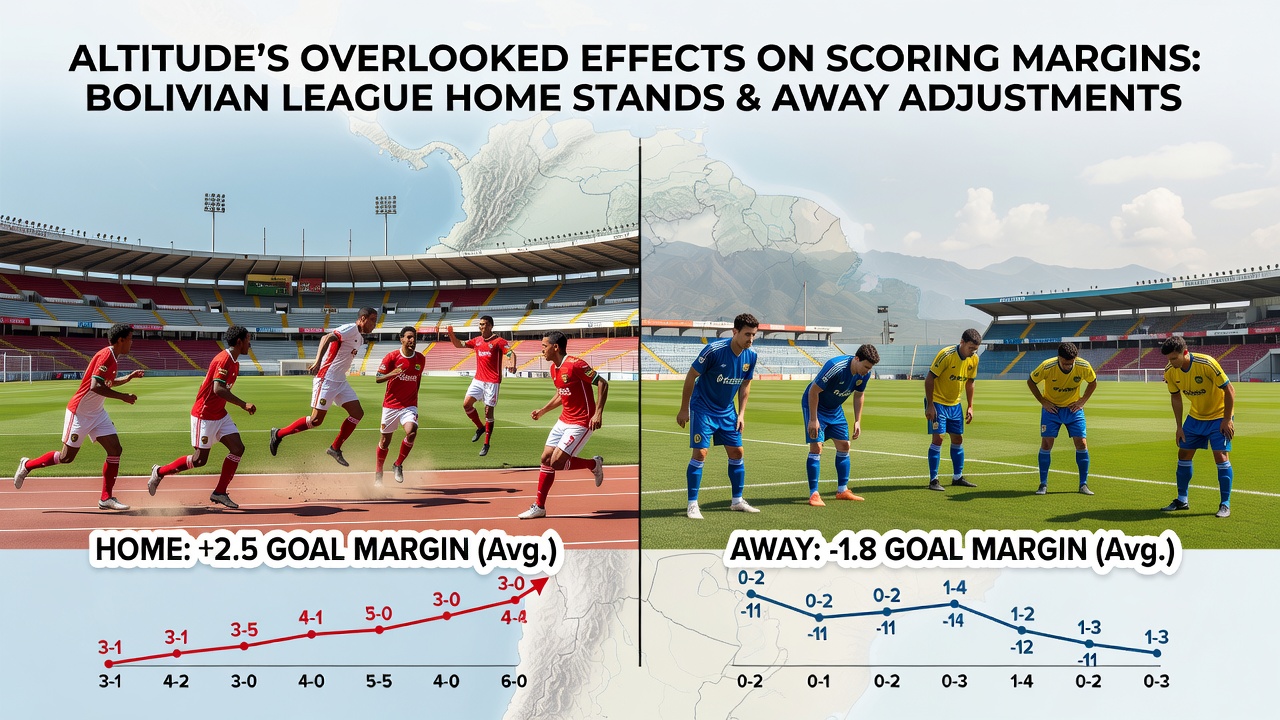
Teams in the Bolivian Primera División compete across some of the highest elevations in world football, and venues such as the Hernando Siles Stadium in La Paz sit more than 3,600 meters above sea level while others like those in Oruro reach similar heights, which creates consistent physiological demands on visiting squads during away fixtures. Data from league matches over multiple seasons shows that home sides in these locations record larger average goal margins than teams at lower elevations, and the pattern holds because reduced oxygen availability accelerates fatigue in players who train and live closer to sea level. Researchers tracking player heart rates and blood oxygen saturation levels have documented faster declines in endurance metrics among away squads, and these changes correlate with shifts in scoring that favor the hosts by the second half.
Geographic and Seasonal Context in Bolivian Football
Bolivian clubs based at altitude maintain home stands that stretch across the calendar, yet the effects intensify during the latter months when fixtures pile up, and October 2026 saw several key matches at La Paz where home teams extended leads after the sixtieth minute as visiting midfielders covered fewer meters per minute. League records indicate that matches at altitude produce an average of 3.2 total goals compared with 2.7 in lowland venues, while the home scoring margin widens by roughly 0.8 goals on average. Observers note that these differences appear most clearly in the final thirty minutes, when accumulated oxygen debt reduces defensive organization for teams arriving from Santa Cruz or Cochabamba.
Physiological Demands and Player Response
Players arriving from lower elevations encounter immediate drops in arterial oxygen saturation that range between 10 and 15 percent within the first twenty-four hours, and training studies conducted by South American sports science groups confirm that maximal sprint distance decreases by up to 12 percent after three days at altitude. The body compensates through increased breathing rate and heart output, yet these adjustments cannot fully offset the energy cost during repeated high-intensity efforts such as pressing or recovering defensive positions. Consequently, away teams often concede more goals from set pieces and counterattacks in the second half, whereas home players who live and train at the same elevation maintain higher work rates throughout the ninety minutes.
Scoring Margin Patterns Across Home and Away Fixtures
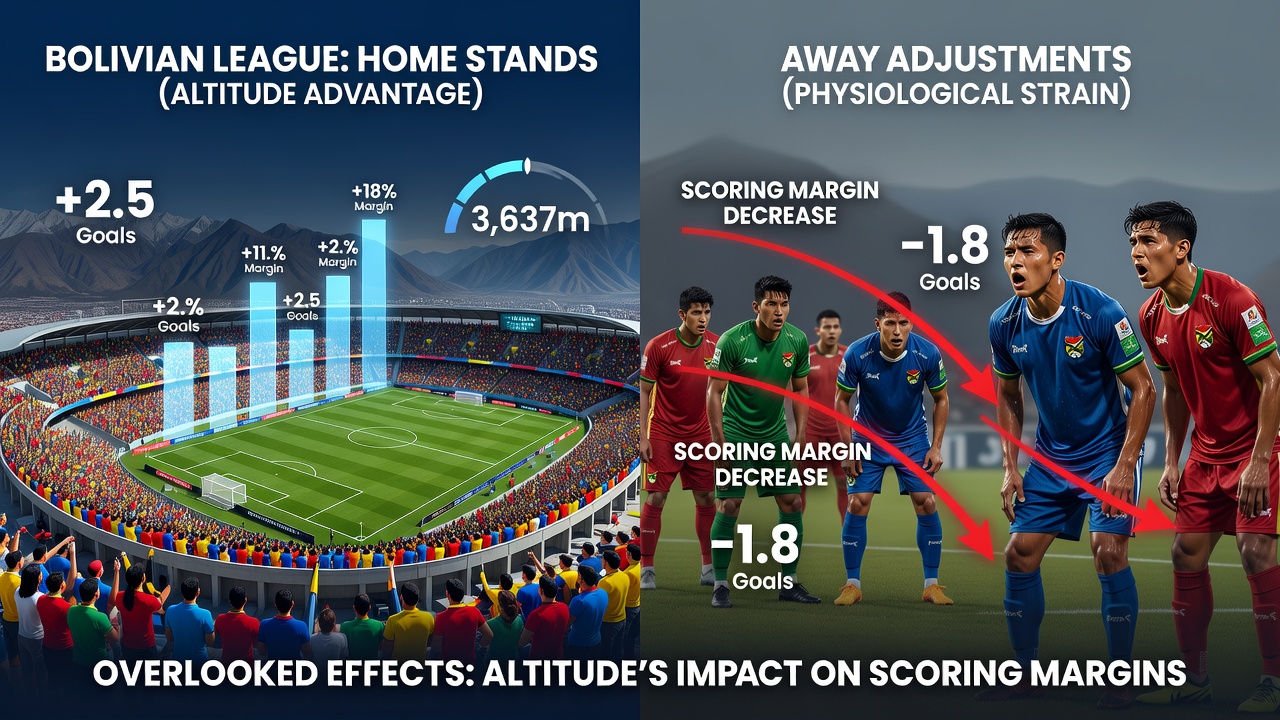
Statistical reviews of the past five seasons reveal that clubs playing home games above 3,000 meters achieve win percentages near 68 percent, and the average margin in those victories reaches 2.1 goals compared with 1.3 goals in away wins at sea-level venues. When the same teams travel to lower altitudes, their scoring output drops while opponents maintain steadier goal tallies, which narrows the margin and produces more draws. Figures compiled by the Bolivian Football Federation show that visiting sides score first in only 28 percent of altitude matches, and once behind they rarely recover because sustained pressure becomes physiologically costlier. These patterns remain consistent regardless of squad quality, which suggests the environmental factor exerts measurable influence beyond tactical preparation.
Adjustments Made by Visiting Teams and Coaching Staff
Coaching staffs traveling to high-altitude venues arrive several days early when schedules permit, and they incorporate modified training loads that emphasize shorter intervals with extended recovery periods to mitigate early fatigue. Some squads request pre-match acclimatization camps in intermediate cities such as Sucre, and data collected during those stays indicates modest improvements in second-half distance covered. Yet the gains rarely eliminate the margin disparity entirely, because full physiological adaptation requires weeks rather than days. Teams that fly in the day before the match exhibit steeper drops in work rate after halftime, and league tracking systems record higher rates of substitutions among defensive midfielders in those circumstances.
Recent Match Examples and Seasonal Trends
During the 2026 campaign, several fixtures illustrated the margin effect when clubs from La Paz hosted sides from the eastern lowlands, and the home teams added at least two goals after the seventieth minute in four of six such encounters through October. Away managers responded by deploying more compact defensive blocks and relying on long balls to reduce the need for sustained running, yet the approach yielded fewer clear chances once the oxygen deficit accumulated. Researchers comparing GPS data from those matches noted that visiting fullbacks reduced high-speed runs by 18 percent in the final quarter, which opened spaces for home wingers to exploit. The same pattern appeared in cup competitions where altitude venues hosted knockout ties, and aggregate scores reflected larger gaps than those recorded in two-legged ties at lower elevations.
Conclusion
League statistics and physiological measurements together demonstrate that altitude shapes scoring margins in Bolivian football through measurable reductions in visitor endurance and second-half output, while home teams sustain higher work rates across full matches. Teams and analysts who account for arrival timing, training modifications, and historical margin data can better anticipate outcomes in both home stands and away adjustments. As the 2026 season progressed, these environmental factors continued to produce distinct patterns that differentiate Bolivian league results from those in lower-lying competitions across South America.